
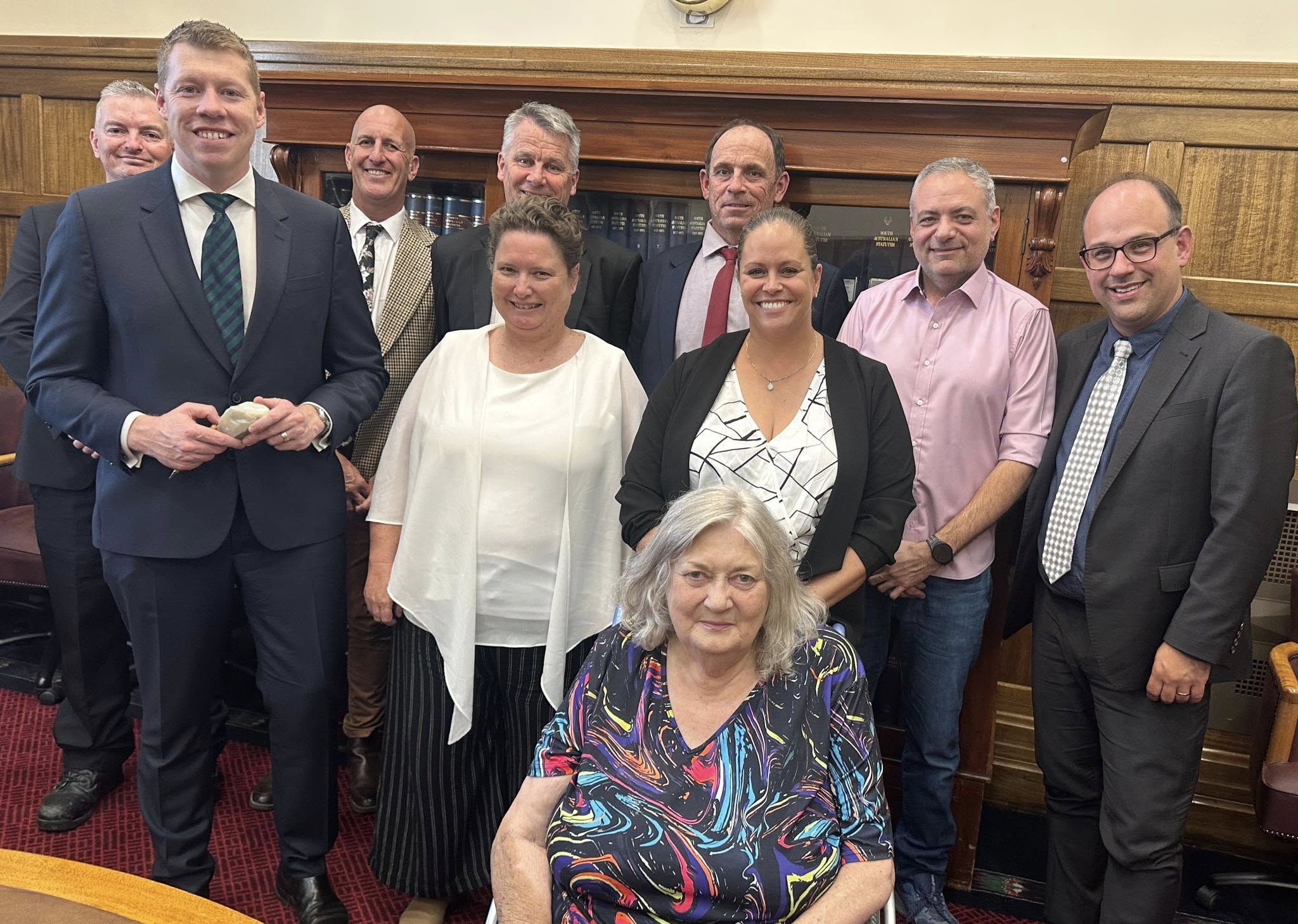
After analysing the association’s constitution, several clauses raise serious red flags about transparency, fairness, and democratic process. Something that has always been the case, with this group, but now emboldened in their required constitution. Below is a breakdown of the most concerning provisions and what they could mean for Coober Pedy residents.
________________________________________
Clause 2.3 — The Facilitation Group as the “Sole Authority”
The Issue:
This clause gives the Facilitation Group — the committee running the association — “sole authority for the interpretation of this Constitution,” with its decisions “final and binding on all members.”
The Impact:
This effectively places unchecked power in the hands of the Facilitation Group. There is no mechanism for ordinary members or the community to challenge or appeal decisions. In practice, this means the committee can determine the rules as they please, interpret them to suit their own purposes, and silence dissent without oversight. It’s a structure more aligned with an autocracy than a community association.
________________________________________
Clauses 5.2 and 5.3 — Restrictive Membership Control
The Issue:
Applications for membership must be proposed and seconded by existing members, and then approved by the Facilitation Group. The group may accept or reject any application “whether or not the applicant has complied with the requirements,” and they are “not required to provide any reason.”
The Impact:
This allows the Facilitation Group to handpick who may join and exclude anyone they choose — including residents who question or criticise their actions. With the ability to deny membership without explanation, the group can easily remain insular and self-protective while claiming to represent the wider community.
________________________________________
Clause 7.2(c)–(e) — A Self-Perpetuating Committee
The Issue:
The first Facilitation Group — those already overseeing Coober Pedy Together prior to incorporation — automatically became the initial committee for a two-year term. Future elections are tightly controlled, with nominations required 28 days in advance and subject to procedural barriers that discourage participation.
The Impact:
This entrenches the founding members’ control. With no early election and little opportunity for others to nominate, the same individuals remain in charge without the community ever having voted for them. It prevents the natural rotation of leadership that healthy community organisations rely upon.
________________________________________
Clause 3(c) — Consultation Defined by the Group Itself
The Issue:
The constitution says the group will engage in “strategic conversations and activities … as guided by community consultation (defined by the Facilitation Group).”
The Impact:
This wording allows the committee to decide what constitutes “consultation.” In practice, this could mean a handful of private meetings or selective discussions being presented as community consensus. There is no requirement for public forums, surveys, or transparent engagement.
________________________________________
Clause 6.2 and 6.3 — Appeals That Lead Back to the Same Committee
The Issue:
Even when members are expelled or rejected, appeals are made to the Facilitation Group itself. The committee that makes the original decision also decides whether to overturn it.
The Impact:
There is no independent appeal process. This creates a closed loop of authority — a hallmark of poor governance. It denies members any impartial avenue for justice, and once again centralises power in the hands of the same small group.
________________________________________
Clause 9.4 — Quorum and Voting Rules That Favour Insiders
The Issue:
General meetings can proceed with a quorum of just five members, and proxy voting is prohibited. The chairperson has both a regular vote and a casting vote, effectively giving them double influence in tied decisions.
The Impact:
A tiny number of individuals could make decisions affecting the entire organisation — and by extension, the broader community it claims to represent. Without proxy votes, members unable to attend in person lose their say entirely.
________________________________________
Clause 4 — Broad Corporate Powers
The Issue:
The association grants itself the power to “acquire, hold, deal with, and dispose of any real or personal property; borrow money; give security for liabilities; and enter into any contract it considers necessary or desirable.”
The Impact:
These powers are typical for large incorporated bodies, but concerning when concentrated within a small, unelected committee lacking external checks. The Facilitation Group could, in theory, take out loans, sign contracts, or dispose of assets on behalf of “the community” with no obligation to seek member or public approval.
________________________________________
Clause 9.3 and 10 — Transparency Loopholes
The Issue:
There are no provisions requiring the publication of meeting minutes, financial reports, or decisions. While the constitution requires accounts to be tabled at the Annual General Meeting, it doesn’t require them to be made public.
The Impact:
For a group claiming to represent Coober Pedy’s interests, this lack of transparency means the public may never see how decisions are made, who benefits, or how funds are used. The promise of accountability is left to internal goodwill rather than enforceable rule.
________________________________________
A Constitution at Odds with Its Mission
The group’s stated vision — “a vibrant, empowered, inspired community of people working together with pride and respect” — is difficult to reconcile with a governance structure that centralises control, limits membership, and silences criticism.
While the constitution satisfies the technical requirements of the Associations Incorporation Act 1985 (SA), its design appears to prioritise control over collaboration. The repeated phrase “at the discretion of the Facilitation Group” runs throughout, giving the impression of a top-down organisation masquerading as a community initiative.
________________________________________
What It Means for the Community
Residents have raised concerns that Coober Pedy Together is less a community movement and more an inner circle making decisions on behalf of others — without transparency, elections, or meaningful consultation.
If the group is to claim to represent the people of Coober Pedy, it must reform its constitution to reflect true democratic principles:
Until then, the words “together” and “community” in its name ring hollow.
________________________________________
Editor’s Note:
Information in this article was drawn from the publicly available Constitution of Coober Pedy Together Incorporated, approved on 1 April 2025, and from public records under the Associations Incorporation Act 1985 (SA). Residents can verify the group’s registration and filings via the SA Consumer and Business Services website or the Australian Business Register.
Image: Screenshot from Coober Pedy Together Facebook page, used for the purpose of reporting and public interest analysis.