
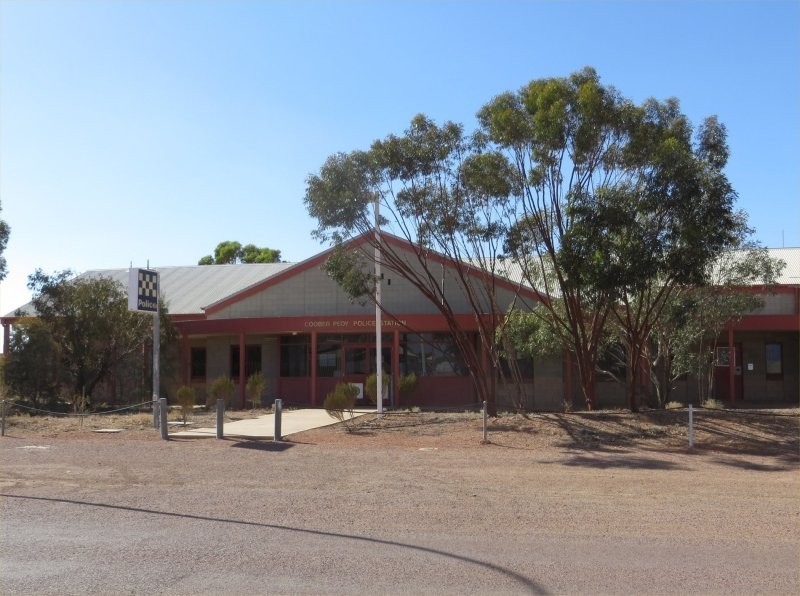
For those of us who live in Coober Pedy, none of this comes as a surprise.
The latest revelations about dangerous police shortages, community constables being forced into frontline roles, and incidents simply going unattended are not a sudden crisis. They are the inevitable outcome of years of neglect, ignored warnings, and hollow assurances from both SAPOL leadership and the state government.
We have been raising the alarm for a long time. Not quietly. Not politely. We have written, complained, reported, and pleaded. Yet here we are, reading a police union letter that confirms what locals have known for nearly a decade: Coober Pedy has been under-policed, under-resourced, and effectively abandoned.
Nine out of nineteen police positions vacant. Community constables – employed specifically to build trust and cultural bridges – being pushed into general policing roles they are neither trained nor meant to perform. One individual sometimes left to police an entire town alone. That is not “challenging regional policing”. That is systemic failure.
And it is dangerous – for residents, for visitors, and for police themselves.
Coober Pedy is not just another country town. It is a regional hub with a transient population, serious social challenges, and responsibility for policing vast, remote areas including the APY Lands. Backup is hours away. Alcohol-fuelled violence is not theoretical – it is a reality. Yet somehow, decision-makers in Adelaide continue to act shocked when the cracks finally split wide open.
What makes this worse is that none of this was unforeseen. According to the police union, these concerns have been raised repeatedly with SAPOL leadership – twenty times in three years – with minimal response. Workplace safety reports piled up. Industrial disputes were lodged. Still, nothing meaningful changed.
Meanwhile, the state government continues its well-rehearsed routine.
We get the photo-op whistle-stop tours. The hard hat. The high-vis vest. The carefully framed smiles as the Premier breezes through regional South Australia, promising to “listen” and “invest” before moving on to the next camera angle.
Yet when it comes to confronting extreme, uncomfortable realities – like a town being left without adequate policing for years – there is silence, deflection, or bureaucratic wordplay.
Take your pick.
And while we’re at it, let’s not mention the Premier’s ongoing failures elsewhere. Except, of course, we should.
Ambulance ramping remains unresolved. Hospitals remain under pressure. Regional health services are stretched beyond breaking point. And then there’s the algal bloom issue – quietly ignored, downplayed, and effectively swept under the rug until the election was safely out of the way.
So yes, let’s not mention it. Except everyone out here noticed.
What this latest police union letter really exposes is not just a staffing crisis at one station, but a broader pattern: regional communities are expected to cope, adapt, and absorb risk while Adelaide reassures itself that “record funding” and recruitment statistics somehow translate into boots on the ground where they are actually needed.
Numbers on a budget line don’t stop violence.
Press releases don’t answer emergency calls.
And incentives don’t help when people are burned out, unsupported, and sent into unsafe situations.
Coober Pedy deserves better than being an afterthought.
Community constables deserve better than being used to patch staffing holes.
And residents deserve the basic expectation that when they call police, someone will actually come.
This situation did not appear overnight. It was built through years of inaction, oversight failures, and political complacency under the watch of the state government – including Premier Peter Malinauskas.
If the government is serious about regional South Australia, it’s time to stop touring it and start fixing it.
Because from where we stand, the warnings were loud, clear, and ignored – and now everyone is paying the price.
Bush Telegraph Dispatch