Coober Pedy has now spent years under administration. Not led by locals. Not guided by elected representatives. But run by government-appointed administrators and CEOs tasked with “fixing” the town.
So here’s the question that should be asked loudly and repeatedly:
How has a town under direct government control ended up, in their own words, facing “catastrophic” risks?
Because that’s not speculation. That’s not opinion. That is straight out of their own Long-Term Financial Plan, where they list risks like “Break Down In Town Water Supply – Likely – Catastrophic” and “Understated Asset Values and Replacement Costs – Almost Certain – Extreme”
This is not a town being stabilised. This is a town being managed in decline.
The documents released this week paint a picture that is impossible to ignore. The council openly admits it is “financially unsustainable in the short, medium and long term” . It admits it does not have the money or borrowing capacity to maintain its own infrastructure. It admits services have already been reduced and are expected to reduce further. It admits it is planning based not on what the town needs, but on what it can afford.
That line alone should stop everyone in their tracks.
Planning based on affordability, not requirement, is not management. It is surrender.
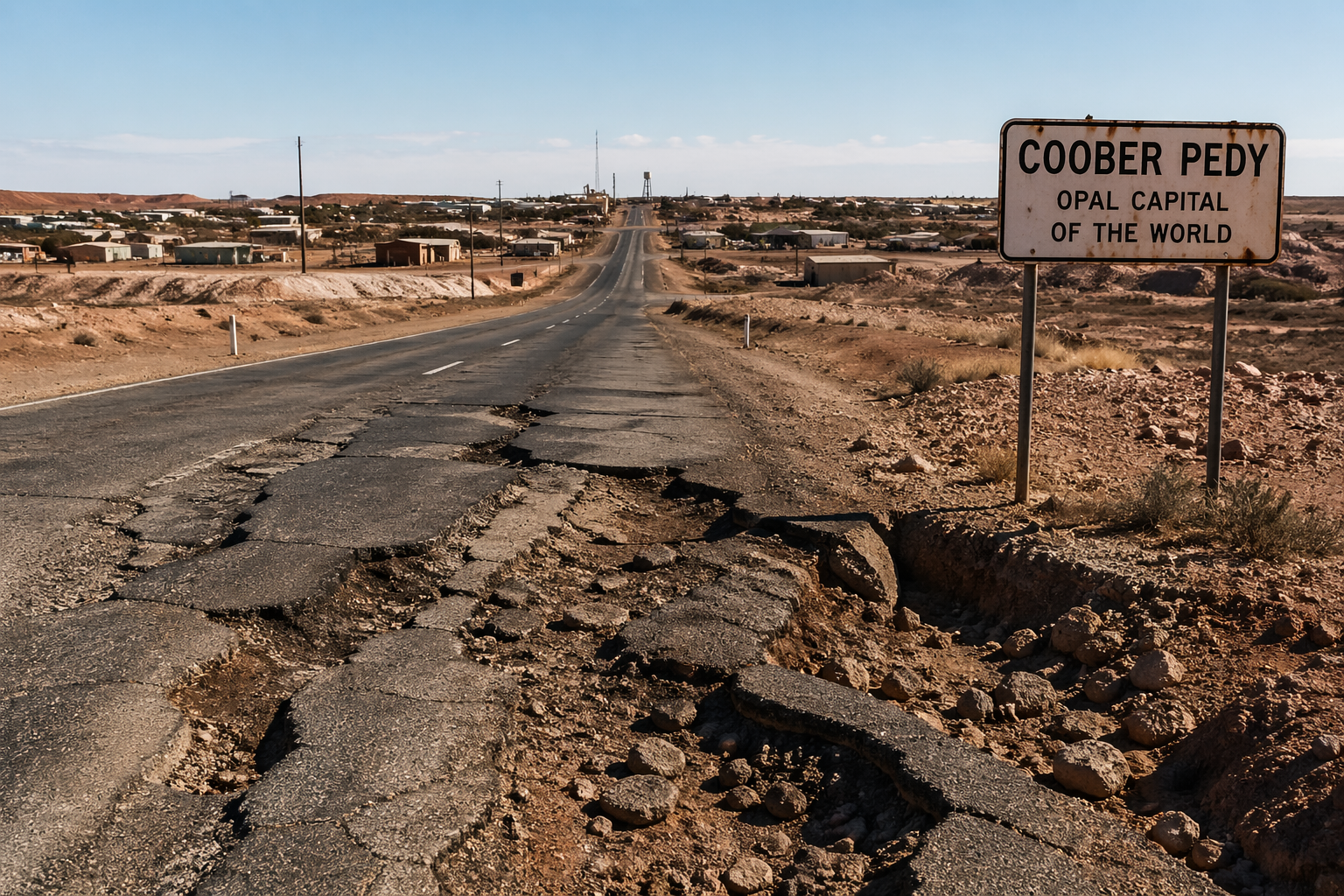
The Infrastructure and Asset Management Plan makes this crystal clear. The town needs nearly $8 million in asset renewals in the first year of the plan. The council has allocated roughly $160,000. The rest, over $7.8 million, simply becomes backlog .
That is not a shortfall. That is abandonment by spreadsheet.
Over the life of the plan, millions remain unfunded. Infrastructure is allowed to degrade. Equipment is not replaced. In fact, more than 70 percent of the council’s plant is already past its useful life, and some has been sold off without replacement, leaving the council warning it may not even be able to carry out basic maintenance on roads and electricity systems .
At the same time, the cost burden is being pushed back onto the people who live here.
Rates are rising by 8.3 percent. Wastewater charges are increasing. And even then, the council admits it is not enough. It states plainly that rate revenue will need to increase above inflation for years to come just to try and regain financial footing .
So let’s be clear about the model currently being applied to Coober Pedy.
Services go down. Costs go up. Infrastructure decays. Population declines. Revenue shrinks. Costs go up again.
It is a self-replicating failure loop, and the council’s own modelling confirms it. Population decline is already occurring, and reduced population directly leads to reduced services . Reduced services then accelerate population decline.
This is not bad luck. This is a predictable outcome of the approach being taken.
And all of this is happening under administration.
This is the uncomfortable truth that needs to be confronted. Coober Pedy is not failing because of local mismanagement. It is failing under a system that removed local control and replaced it with bureaucratic oversight that has produced, by its own admission, an unsustainable, high-risk, deteriorating outcome.
So how did we get here?
The answer is embedded in the assumptions that underpin these plans. They treat Coober Pedy like a regional council that should be able to balance its books through rates, fees and efficiency gains. They talk about “financial sustainability” as if this town exists in the same reality as Adelaide suburbs.
It does not.
Coober Pedy is not a conventional council. It is an outpost.
It is a service centre for remote northern South Australia. It supports Indigenous communities. It supports mining operations. It supports long-haul freight routes. It exists in one of the harshest and most logistically complex environments in the country.
It will never be “profitable” in the way these documents quietly demand.
And that is not failure. That is reality.
The failure is pretending otherwise.
The state government must accept a simple, inalienable truth. Coober Pedy requires ongoing structural support. Not temporary bailouts. Not rate hikes disguised as reform. Structural recognition of what the town is.
There was a time when the council understood this better than it does now. It generated revenue through practical, grounded means. Selling gravel. Supplying materials. Providing services to locals and industry. Supporting the ecosystem that actually exists here.
Much of that has been stripped away.
In its place, we’ve seen flashes of disconnected thinking. Big-ticket ideas that look impressive on paper but bear little resemblance to the reality of a struggling outback town. The kind of thinking that produces talk of multi-million-dollar vanity projects while the core infrastructure quietly collapses.
Locals are told to tighten belts. Meanwhile, visions are floated that feel more like distractions than solutions.
And through it all, the same lever keeps getting pulled.
Raise the rates.
Raise the charges.
Hope it balances.
It won’t.
Because you cannot tax a shrinking population into sustainability. You cannot defer maintenance indefinitely without consequence. You cannot run critical infrastructure on outdated data and call it a plan.
Even the council acknowledges that its financial modelling is compromised because the underlying data is unreliable . Yet decisions continue to be made on that very foundation.
This is not a path to recovery. It is a controlled slide.
There is, however, another way to look at this town.
Coober Pedy is sitting on one of the most underutilised natural advantages in the country. Sun. Heat. Land. And a population already adapted to underground living that offers natural temperature regulation. In a world increasingly focused on renewable energy and storage, this is not a liability. It is an opportunity.
But that kind of thinking requires imagination. It requires stepping outside the narrow framework of municipal accounting and recognising the strategic value of the place.
Until then, the town will continue to be treated as a balance sheet problem instead of what it actually is.
A critical outpost.
A service hub.
A community that cannot be measured purely in rates and revenue.
The documents released this week should serve as a wake-up call. Not because they hide anything, but because they don’t. They lay the situation bare.
Financially unsustainable.
Service levels declining.
Infrastructure backlog growing.
Catastrophic risks identified.
All under administration.
If that doesn’t raise alarm bells, nothing will.
The question now is whether anyone in a position of power is willing to rethink the model before the situation moves from “extreme risk” to irreversible reality.
Bush Telegraph Dispatch