
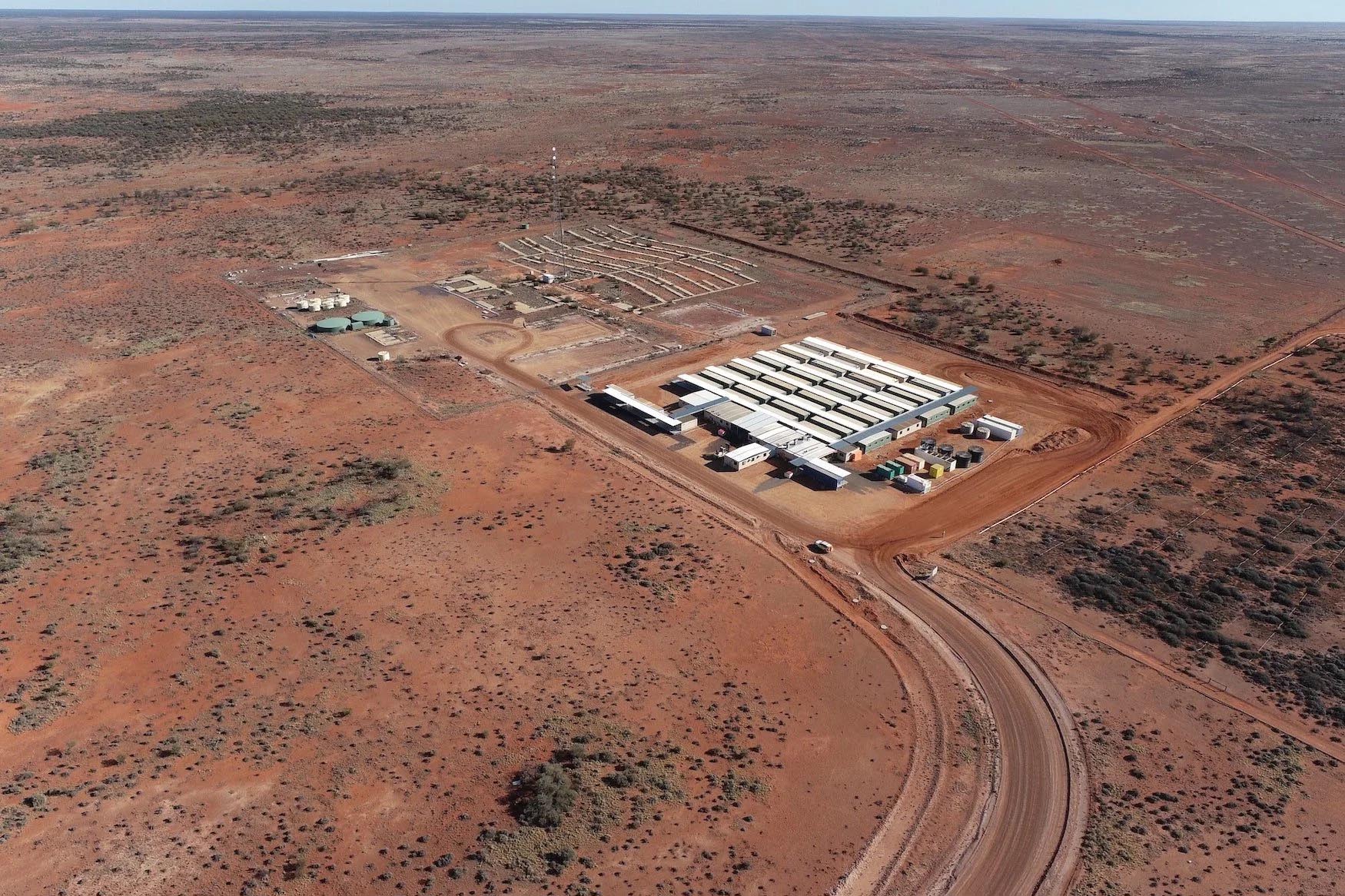
Around 200 jobs are in limbo after a commercial dispute halted operations at the Buzzard iron ore mine south of Coober Pedy
Coober Pedy has been dealt another serious economic blow, with operations shutting down at the Buzzard iron ore mine and around 200 workers facing an uncertain future.
Employees were informed following a meeting at the mine on Wednesday afternoon that operations would cease amid a financial dispute between mine owner Central Iron and principal mining contractor Agile Mining Services.
Agile reportedly told employees to use available annual leave where possible while the companies attempt to resolve their “commercial position”. Other reports indicate workers without sufficient leave may be left without pay.
For a small and remote community such as Coober Pedy, the sudden interruption of hundreds of mining jobs is not simply an internal disagreement between two companies.
It has the potential to affect families, accommodation providers, retailers, fuel suppliers, transport operators and the many other businesses that depend, directly or indirectly, on mining activity throughout the Far North.
Even where workers operate on fly-in, fly-out rosters, mine activity still brings contractors, freight movements, purchases and spending through the district. When that activity stops without warning, the consequences quickly travel beyond the mine gate.
Commercial dispute—not a depleted mine
The Buzzard mine is owned by Central Iron Pty Ltd, a wholly owned subsidiary of Peak Iron Mines. Agile Mining Services is the principal contractor responsible for mining and associated operations at the site.
The mine is situated approximately 118 kilometres south-southeast of Coober Pedy and produces direct-shipping hematite iron ore.
Buzzard had been promoted as a five-year operation with an iron ore reserve of approximately 13.8 million tonnes. Its owners have also estimated that the project could generate more than $50 million in royalties for South Australia.
That makes the sudden shutdown particularly concerning.
South Australian Mining Minister Tom Koutsantonis has said the dispute does not relate to the viability of the mine or a lack of available work.
“This is not about them not being a viable mine or there not being the work—this is a dispute about cost,” the Minister told the ABC.
He described the situation as an internal dispute between the mine owner and its contractor and said he expected the parties would resolve it relatively quickly.
That may ultimately prove correct. However, assurances that the dispute should be resolved will provide limited comfort to workers who do not know when they will return to work—or whether they will continue to be paid in the meantime.
Claims about Chinese investors remain unconfirmed
Claims are circulating locally that the shutdown resulted from bills not being paid by Chinese investors.
The Bush Telegraph has been unable to find reliable public evidence supporting that explanation.
Available government and company documentation describes Peak Iron Mines as a privately owned Australian company. A government mining proposal published in 2025 described Peak Iron as “100 per cent Australian owned”.
Peak Iron was established in 2019 by Australian financier Gavin Argyle and other investors associated with Capital Investment Partners. Because Peak Iron is privately held, its complete current shareholding is not readily available through ordinary public company reporting.
It is possible that overseas customers, financiers or companies elsewhere in the ore supply chain have commercial relationships with the project. That, however, is not evidence that Chinese investors own the Buzzard mine or caused the present shutdown.
Until either Peak Iron or Agile publicly explains the accounts in dispute, any allegation about unpaid bills or foreign investors should be treated as unverified.
Remote communities cannot absorb repeated shocks
Coober Pedy is regularly told that mining investment will provide employment, economic stability and a stronger future for the region.
When projects are announced, communities hear about job creation, royalties, regional development and opportunities for local businesses.
When difficulties emerge, however, the same communities are too often left waiting for information while negotiations take place behind closed doors.
A disruption involving 200 jobs would be significant in any community. In a remote town with a small population, limited employment alternatives and businesses already carrying high operating costs, it is potentially devastating.
Coober Pedy has endured years of uncertainty, population decline, inadequate services and an economy heavily exposed to decisions made elsewhere. The Buzzard shutdown is another reminder of how vulnerable remote communities remain when major employers abruptly withdraw work.
The State Government may regard this as a private commercial dispute, but the consequences will not remain private if wages disappear, local bills go unpaid and families are forced to leave the district.
The government should be seeking immediate briefings from both companies, monitoring the treatment of workers and contractors, and preparing assistance if the shutdown continues.
Everyone will hope the Minister is correct and that the disagreement is settled quickly.
But hope is not enough.
Bush Telegraph Dispatch