
OPINION | Bush Telegraph
Where was the photograph of Nicola Centofanti MLC outside the abandoned dental clinic?
Where was the photograph beside the massive pothole at our town’s main—and only—roundabout?
Where was the photograph of her inspecting the dilapidated Kempe Road pump house?
Those are the images missing from the public coverage of her recent Coober Pedy visit. Their absence matters, because those places tell a story about living here that an opal mining experience and a pleasant evening around a fire cannot.
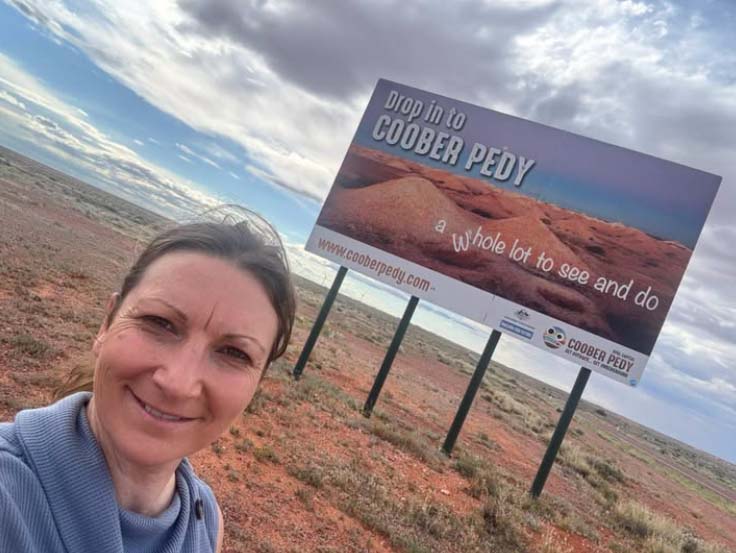
The photographs and posts shared by Ms Centofanti and Coober Pedy Together show a warm welcome, generous hospitality, local attractions and enjoyable experiences. We see a town that knows how to entertain a visitor.
But where is the town that needs help?
If a politician comes here to understand our concerns, those concerns should be on the itinerary—and visible in the account of the visit.
Take them to the facilities residents are worried about. Show them the infrastructure that needs attention. Stand outside the dental clinic and explain what the loss of access means for families. Let the condition of essential assets speak as loudly as the welcome speeches.
These places may not make attractive promotional photographs. They would make meaningful ones.
The town beyond the happy snaps
To be fair, CPT’s post mentions discussions with emergency service leaders, community wellbeing and healthy ageing. Those subjects matter, and the people who contributed to those discussions deserve to be heard.
But the public account offers broad descriptions of conversations and possibilities. Ms Centofanti’s account of her evening celebrates wonderful company, food, mining and an unforgettable welcome.
The impression left by that coverage is overwhelmingly one of enjoyment.
That is precisely the problem.
Coober Pedy can be welcoming, fascinating and full of generous people while also facing serious problems. A political visit should make those problems impossible to overlook.
When the attractions are shown in detail and the difficulties are reduced to general references to “support” and “conversations”, the result is a picture of the town with its hardest realities pushed out of frame.
Whatever the intention, that presentation risks masking the very circumstances residents need political representatives to confront.
We have already asked “what comes next?”
We have asked before what will follow the visits, meetings and photographs. Repeating that question after every event is becoming an exercise in itself.
There is an earlier question that deserves a much firmer answer: what were visiting representatives actually shown?
CPT did advertise an opportunity for residents to speak with Ms Centofanti: “come down for a chat” between 7pm and 8pm at a free sausage sizzle, before a family movie at the drive-in.
That invitation should be acknowledged. But so should the limitations of what was offered.
The event was promoted as a “Free Community Movie Night”, with access to a parliamentarian fitted into the hour before the screening. The poster did not advertise a dedicated public forum, an agenda addressing urgent concerns, or a process for recording questions and reporting back on answers.
That matters. The way an invitation is framed tells residents what kind of engagement they can expect.
A sausage sizzle can bring people together. An informal conversation can open a door. But residents facing serious concerns need confidence that their participation will lead to more than a pleasant exchange before the entertainment begins.
Where was the dedicated opportunity to put the difficult questions publicly, hear the answers together and establish who would take responsibility for following them up?
People should not have to compete with the preparations for a movie night to explain why essential services and deteriorating infrastructure need political attention.
Nor should anyone assume that residents who do not attend an event like this have nothing to say. People can care deeply about their town while doubting whether another casual chat will achieve anything. Their time matters, and organisers need to give them a credible reason to believe that taking part will make a difference.
If a familiar format is failing to attract meaningful participation, repeating it is no substitute for reconsidering the approach.
Most importantly, an invitation to a barbecue does not answer the question of what Ms Centofanti was shown during her visit.
Were the dental clinic, the roundabout and the Kempe Road pump house included? Were the problems explained where they could be seen firsthand? Were specific requests put to her?
The supplied posts do not answer those questions. They do not prove that these issues went unmentioned, either. But the community should not have to search between the happy photographs for evidence that its difficulties received serious attention.
A photograph beside a pothole would not repair it. A visit to the dental clinic would not reopen it. But publicly confronting those conditions would show residents that their concerns had a prominent place in the visit.
The town’s problems deserve dedicated time, direct inspection and public answers. They should not be left to whoever manages to raise them over a sausage before the movie starts.
Hosting carries a responsibility
Coober Pedy Together is entitled to celebrate the town. Local businesses and residents are entitled to offer hospitality, and nobody should begrudge them the opportunity to showcase what they do well.
But an organisation taking a prominent role in hosting political visitors should expect scrutiny of the picture it presents.
In my view, a visit promoted primarily through attractions and smiling photographs falls short of the advocacy this community needs. CPT should be helping bring the difficult issues into sharper focus.
Ms Centofanti also carries responsibility for her own account of the visit. Residents deserve to hear what concerned her, what she believes needs attention and what she intends to press for through her parliamentary role.
Warm words about our character and generosity are easy to welcome. They are much harder to mistake for progress when you still have to drive around the pothole.
Coober Pedy’s hospitality is not evidence that Coober Pedy is doing well.
Its residents’ resilience is not a reason to accept deteriorating conditions.
And a politician leaving with wonderful memories is not, by itself, a community achievement.
We will applaud meaningful action and give credit where it is earned. Until then, we should stop treating the photograph as the result.
Show visiting politicians the Coober Pedy that needs their attention. Make the problems as visible as the welcome.
Bush Telegraph Dispatch