
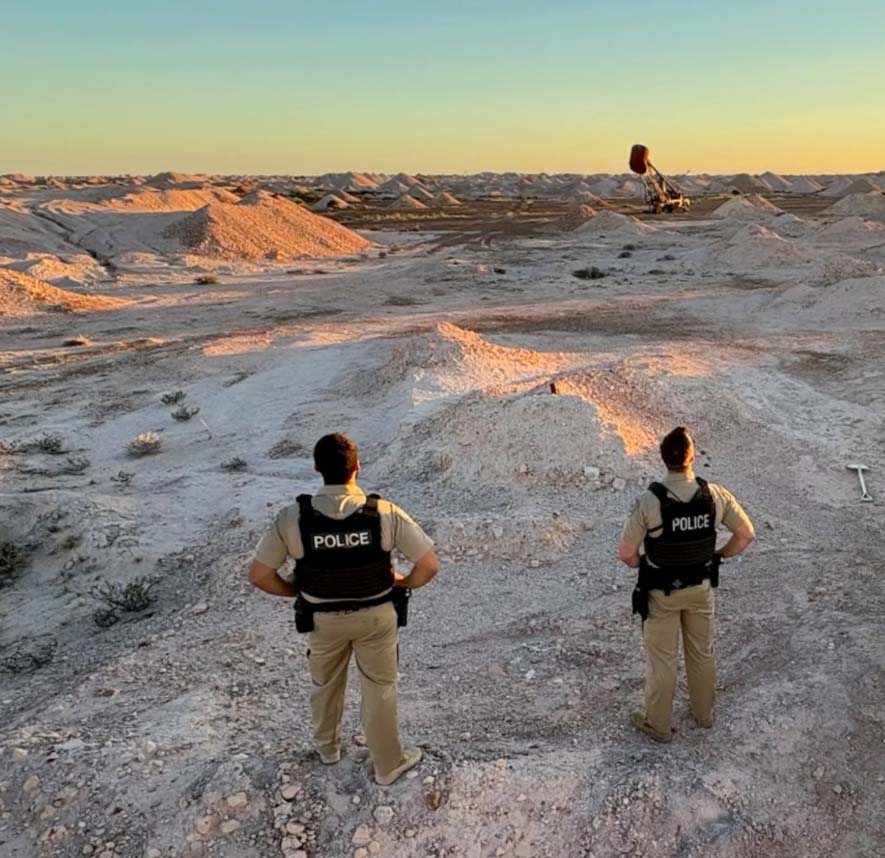
Coober Pedy is seeing a welcome increase in police presence, with officers more visible around town, including on bicycle patrols, and local reports that the station now has its full complement of police.
For residents, businesses and the officers who carried the burden of understaffing, that is encouraging news. A properly supported police service is something this community has needed for a long time.
The improvement comes after sustained advocacy, formal warnings, industrial proceedings and media scrutiny. Recognising that history means acknowledging the many people who raised concerns and pressed for action — particularly the Police Association of South Australia and the officers it represents.
The association’s involvement was substantial and well documented.
In January, InDaily reported on a letter from association president Wade Burns to Deputy Premier Kyam Maher warning of serious staffing deficiencies. According to that letter, nine of the station’s 19 positions were vacant, with further limitations on the availability of remaining personnel. The association also pointed to 35 workplace health and safety reports and an industrial dispute over conditions at the station.
These were formal warnings about the ability of police to work safely and provide the service the community required.
By May, the dispute had produced recommendations from the South Australian Employment Tribunal for improved incentives to attract and retain officers. ABC reported that Commissioner Grant Stevens rejected the non-binding recommendations, citing cost and inequity between regional postings. The association continued pressing the case for urgent action.
In August, Burns again wrote to the Deputy Premier seeking intervention. ABC reported his warning that unresolved staffing and safety problems exposed police and community members to foreseeable harm.
The Bush Telegraph covered that warning on 13 August in “Coober Pedy’s Police Are Not the Problem — They Need Help.” Our article reported the association’s forecast of 11 vacancies, potentially rising to 12, from an establishment of 19 positions by the end of August. Its central argument was straightforward: the officers serving this town needed enough colleagues and support to do their jobs safely.
There was a further significant development in September. The association announced a proposed enterprise agreement that specifically included Level 3 incentives for Coober Pedy, linking that provision to its advocacy before the tribunal. At the time of the announcement, the agreement still required a member vote and tribunal ratification. Burns also acknowledged the state government’s constructive role in those negotiations.
That record gives the Police Association a strong claim to recognition as a leading advocate for change. Its work went beyond drawing attention to the problem: it pursued formal processes and practical improvements to employment conditions.
Media coverage also deserves recognition. ABC followed the issue through January, May and August. InDaily exposed the early staffing warnings, while the Coober Pedy Regional Times covered the proposed September agreement and its inclusion of Coober Pedy. Local reporting, including this publication’s coverage, helped keep the issue before the community.
Public scrutiny matters. When staffing shortages and repeated safety warnings become public, authorities face questions they must answer. It is not possible to measure precisely which headline, letter or meeting prompted a particular decision, but the record shows sustained attention from several directions.
Residents, business owners and individuals who raised concerns and sought help also deserve thanks. Their efforts matter whether or not they attracted publicity.
Coober Pedy Together also discussed policing during its September Adelaide visit, according to its published account. That contribution sits within a much longer history of advocacy already underway.
There is no sound basis in the available public record for assigning the improved staffing position to any single community organisation.
Above all, recognition belongs to the police who continued serving Coober Pedy through the shortages, the relieving officers who helped, and those now taking up positions in town. SAPOL’s work to staff the station and government support for recruitment and retention are essential to making improvements last.
The increased presence is welcome. The next test is maintaining it, with staffing arrangements that give officers reliable backup and residents confidence that help is available.
Coober Pedy should celebrate this progress generously, remembering everyone who helped keep the need for properly resourced policing on the agenda.
A safer, better-supported Coober Pedy is a community achievement. The credit should reflect that.
Bush Telegraph Dispatch