
By Jason Wright
Before Coober Pedy is sold another vision of what it could become, someone needs to deal with what it is struggling to remain: a functioning town.
A place where people can access essential health care. Where public facilities are maintained. Where infrastructure can cope with the people already here. Where a breakdown does not threaten to become a financial crisis.
That should be the starting point for any group claiming to speak for this community.
In this writer’s opinion, Coober Pedy Together has been out of step with those priorities from the beginning. Its most visible projects and proposals too often concern events, attractions and improvements to public spaces, while the harder questions about services, maintenance and the town’s ability to sustain itself remain unresolved.
Some of those ideas are admirable. But an admirable idea is not automatically the right priority.
Our earlier reporting on council’s financial and infrastructure plans described declining population, reduced services, inadequate renewal funding and serious risks to essential infrastructure. It identified a town-water breakdown classified as likely, with catastrophic consequences. That is a warning about the foundations on which every new proposal depends.
Against that background, residents are entitled to ask why so much attention appears to go towards making Coober Pedy more attractive to visitors, rather than making it more workable for the people who live here.
Tourism matters enormously to this town. But visitors also need working water facilities, adequate waste disposal, safe public spaces and reliable services. Encouraging more activity without ensuring those basics can cope is a poor order in which to rebuild a community.
The proposed $7.5 million drive-in redevelopment illustrated the problem.
Our existing drive-in is worth protecting. It is part of Coober Pedy’s character and gives visitors already travelling through another reason to stay. But that is a very different proposition from assuming a much larger redevelopment will generate enough additional demand to justify its scale and upkeep.
Would an Adelaide family really choose to drive hundreds of kilometres to Coober Pedy because we have an upgraded outdoor cinema, when they can watch the same film close to home? What evidence supports that expectation?
And, more immediately, who would operate it?
Over the past year, I have seen screenings cancelled because there were insufficient volunteers. That should prompt a sober assessment of operating capacity before anyone promotes a much larger facility.
A new building does not create a volunteer roster. A master plan does not staff a canteen. A capital grant does not guarantee the money required for maintenance, cleaning, repairs and replacement equipment.
The same test should apply to festivals and events.
The modest attendance I have observed at CPT’s Fringe activities gives me little confidence that these proposals reflect strong local demand. It is not a formal attendance audit, but it is a reason to ask for the numbers: how many people attended, what did delivery cost, and what lasting benefit followed?
There was also talk of an October music festival. Whatever became of that proposal, the practical questions remain. Who was expected to come? Who would do the work? What capacity did the town have to accommodate the event, and what evidence showed it was viable?
Enthusiasm needs to be matched by demand and the ability to deliver.
Then there are the facilities already improved.
At the playground, my impression is that use has not increased and may have declined. The damaged sign, with a gaping hole, and the planted trees that appear dead or missing raise a more concrete concern: what happened to the follow-through?
CPT’s published account records community planting supported by a Grassroots Grant and local businesses. That was worthwhile work. But the lasting value of planting depends on watering, protection, replacement and care long after the community barbecue ends.
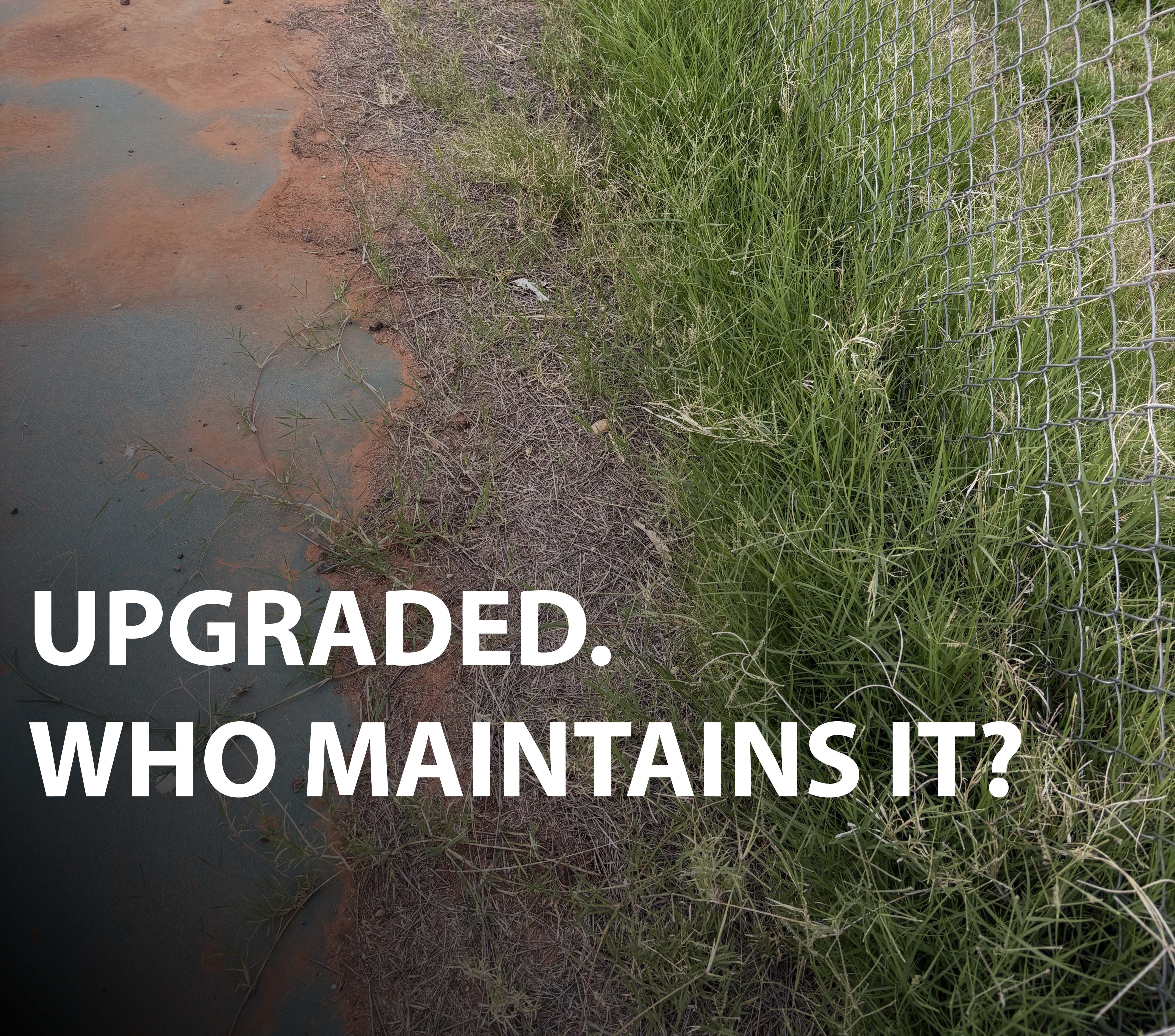
The BHP-supported basketball court upgrade raises a similar question. CPT was involved in that project, yet the condition I now see around the courts hardly suggests a dependable maintenance arrangement.
Long grass is an obvious concern for parents as summer approaches, including worries about snakes. An upgraded sporting facility should be somewhere families feel comfortable sending their children.
Responsibility for routine maintenance must be clear. If council is responsible, it should fulfil that responsibility. If it cannot afford to, that limitation needs to be addressed before further projects add to the burden.
These observations do not mean playgrounds and courts are unimportant. They mean the town needs to be able to look after them.
The newly listed $49,680 grant for CPT’s town oval revitalisation and event activation should face exactly the same scrutiny.
What will be delivered? Who will maintain it? What will the annual costs be? Who pays when something is vandalised or breaks? How will residents know whether the investment is producing a lasting benefit?
Winning funding is one step. Keeping an improvement useful is the real test.
Nor is a grant an unrestricted pot of money that can simply be redirected to a dentist. Different programs have different purposes. But that does not answer the broader question of what CPT chooses to pursue, or where it directs its advocacy.
A community organisation can seek partnerships and press governments for dependable dental care, accessible psychological support, essential worker accommodation and reliable infrastructure. It can make those needs its most persistent public demands.
That is the focus I believe Coober Pedy needs.
Published service listings cannot, by themselves, tell us whether a resident can obtain a timely local appointment. The meaningful measure is whether people can actually get the care they need, when they need it, without unreasonable travel, delay or expense.
Likewise, during the tourist season, the overflowing dump points and vandalised water dispenser I have encountered are reminders that existing visitor facilities already require attention.
Every invitation to bring more people here should be accompanied by a credible plan to support them.
There is a lesson in the practical spirit of the old Miners and Progress Association: identify what the town needs, organise around it, and build something the community can sustain.
We should demand that same discipline today.
CPT should be judged by measurable improvements in everyday life: better access to services, facilities that remain safe and usable, maintenance arrangements that work, and advocacy that produces practical results.
Residents deserve to see those outcomes beyond the launch photographs and announcements.
Coober Pedy needs a solid foundation before another facelift. Until essential services and infrastructure are secure, another attraction or freshly improved public space risks becoming one more thing this town cannot afford to look after.
Build a town people can stay in. Then make the case for bringing more people to it.
Bush Telegraph Dispatch